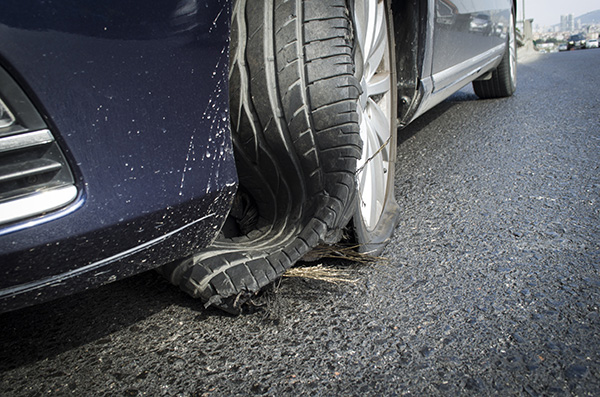
A bent rim is one of those problems that can be easy to miss until it starts getting on your nerves. Maybe a tire keeps losing a little air, but never enough to go flat. Or the steering wheel starts to shimmy at speed, then calms down again when you slow down. The frustrating part is that both symptoms can come from the same root issue, even when the tire still looks fine from the outside.
If you understand what a bent rim actually does to your car, it’s a lot easier to catch it early and avoid burning through tires, time, and repeat balancing appointments.
How A Bent Rim Can Cause A Slow Leak
Yes, a bent rim can absolutely cause a slow leak. The tire bead needs a smooth, consistent surface to seal against, and a small bend can create a tiny gap that leaks air little by little. Sometimes it only leaks when the wheel is in a certain position, which is why you might top it off, forget about it, and then notice it low again a week later. A bend can also make the bead area flex more as you drive, especially over bumps, and that movement can worsen the leak over time.
Why A Bent Rim Can Create Highway Vibration
Highway vibration usually comes down to balance and roundness. A rim can be bent enough that it doesn’t spin perfectly true, so even if the tire is balanced, the wheel can still wobble slightly. At lower speeds, you may not feel it, but once you hit a certain range, the vibration becomes noticeable in the steering wheel, seat, or floor. We see this a lot after pothole hits, curb impacts, or even rough road seams that you didn’t think were a big deal in the moment.
Clues That Point To A Rim Problem Instead Of A Tire Problem
A tire can cause the same symptoms, so the goal is spotting the hints that lean more toward the wheel. Here are a few signs drivers commonly notice:
- One tire keeps losing air, but no nail is found in the tread
- The vibration shows up in a specific speed range and feels rhythmic
- Balancing helps briefly, then the shake returns
- You see a new scuff mark on the rim edge after a pothole or curb contact
- The steering feels fine around town, then gets annoying on the freeway
None of these are a perfect guarantee, but together they paint a pretty clear picture.
Where Rims Bend Most Often And What It Does To The Tire
Most bends happen on the inner lip of the rim, not the outer face, which you can easily see. That inner edge takes the hit first when a tire drops into a pothole, and it can bend without cracking. When the inner lip is out of shape, the tire bead may not seal consistently, and the wheel may not spin true.
That can also affect tire wear. A wheel that wobbles can make the tire hop slightly, and over time, that can create uneven tread wear that sounds like a low hum. If you keep driving on it, the tire can start to wear in a way that no alignment will fully fix because the tire itself has developed a pattern.
A Simple Timeline Of How This Usually Gets Worse
Early on, you’ll notice small air loss or a mild shake that comes and goes. In the middle stage, the leak becomes more consistent, or the vibration becomes easier to trigger at speed, especially on smoother roads where you can feel it clearly. Later on, you may start seeing uneven wear, longer stopping distances on wet roads due to reduced contact, or a tire that becomes harder to balance properly. Once the tire has worn unevenly for long enough, fixing the rim may stop the vibration, but the tire may still be noisy or shaky because the wear pattern is already there.
The Cost Smart Way To Handle A Suspected Bent Rim
If you suspect a bent rim, don’t keep chasing it with air top offs and repeated balancing. The better approach is to confirm the leak source and check wheel runout, which is a fancy way of saying how true the wheel spins. If the rim is bent, the next step is deciding whether it can be repaired safely or if replacement makes more sense. It also matters whether the tire has been driven low, because a tire that’s been run underinflated can have sidewall damage that isn’t obvious at first glance.
We also like to check the tire bead area and valve stem, since those can mimic a rim leak. The point is to solve the real problem once, instead of replacing parts that were never the issue.
When You Should Stop Driving And Get It Checked
If the tire is losing air fast enough that you’re topping it off every day or two, don’t push it. Low pressure builds heat, and heat is what damages tires from the inside. If the vibration suddenly gets worse, shows up at lower speeds, or you feel it during braking, move it up the priority list. And if you hit something hard enough that the steering wheel is suddenly off center or the car starts pulling, it’s worth checking for more than just a bent rim.
Get Wheel And Tire Service in Garden Grove, CA, with Morrison Tire Inc.
If you’re dealing with a slow leak, a new highway vibration, or both, we can inspect the wheel and tire, confirm what’s actually causing it, and lay out the best fix without guessing. We’ll also check for uneven wear so you don’t end up solving the vibration only to find the tire is already damaged.
Call Morrison Tire Inc. in Garden Grove, CA, to schedule an inspection and get back to a smooth, steady ride.