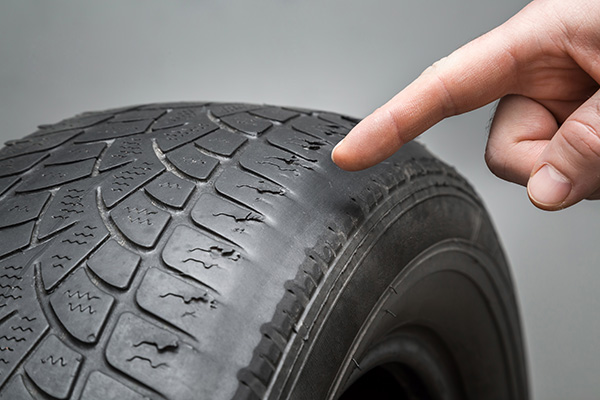
Uneven tire wear sneaks up on a lot of drivers. The car still feels mostly fine, but when you look closely at the tread, one edge is thin, the center looks different from the shoulders, or one tire is wearing faster than the rest. Those patterns are your tires telling you something about alignment, suspension, or air pressure.
Paying attention early can save a full set of tires and help the car drive safer and smoother.
Why Uneven Tire Wear Shows Up So Often
Tires are doing more than just rolling. They steer, brake, and hold the weight of the car over bumps, potholes, and driveway lips. Any time alignment is off, a suspension part is loose, or pressures are wrong, the tread is dragged or loaded in a way it was not designed for. That extra stress may not show up as a big pull on the wheel right away, but it does show up in the tread blocks over a few thousand miles.
Modern vehicles are also more sensitive to minor alignment changes than older cars. Low-profile tires, wider wheels, and tighter suspension geometry make small angles matter more. Our technicians often see uneven wear long before a driver notices anything strange in the way the car handles.
Common Tire Wear Patterns and What They Mean
A quick look at the tread can reveal a lot about what is going on underneath the car. Some of the most common patterns include:
- Inside or outside edge worn much faster than the rest of the tread
- Both outer shoulders worn with a good amount of tread in the center
- Center of the tread worn more than both edges
- Scalloped or cupped spots that make the tread look wavy around the tire
- Random high and low spots that cause a humming or droning sound at speed
Edge wear usually points toward alignment angles being off. Center wear suggests overinflation, while both shoulders wearing together often means the tire has been run soft. Cupping or scalloping is often related to worn shocks or struts that let the tire bounce instead of staying firmly planted on the road.
How Alignment and Suspension Issues Create Tire Wear
When alignment is out, the tires are pointed in slightly different directions than the car is traveling. That might mean a little too much toe in, a little too much toe out, or too much camber on one corner. Instead of rolling cleanly, the tire is being scrubbed sideways a tiny amount with every rotation. Over thousands of miles, that constant scrub wipes away tread on one edge long before the rest of the tire is done.
Worn suspension parts make this problem worse. Loose ball joints, tired control arm bushings, or worn tie rod ends let the wheel move around under load. On the highway, that can feel like a vague or wandering steering feel. In the tread, it shows up as irregular wear that often causes road noise. Fixing alignment without addressing worn parts is usually a short-term bandage, which is why we like to check both at the same time.
Driving Habits That Quietly Chew Up Tires
Even with perfect alignment, how you drive has a big impact on tread life. Hard cornering, late braking, and quick steering inputs load the outer edges of the front tires heavily. Hitting potholes or curbs can knock alignment out in a split second. Running through tight parking lots with the wheel cranked at full lock for long periods can scrub the front tires more than most people realize.
Ignoring tire pressures is another big one. Running several pounds low on air for months makes the shoulders work much harder and flex more, which builds heat and wears them down. Setting pressure only when the tires are hot, or guessing instead of using the placard in the door jamb, can have the same effect.
Simple Checks You Can Do at Home
You do not need a lift to spot early tire wear. Once a month, turn the steering wheel full left and right while parked and look across the tread of the front tires. Compare inside, center, and outside edges with a flashlight if needed. Run your hand gently across the tread blocks; if they feel smooth in one direction and sharp in the other, that is early cupping.
Check pressures with a decent gauge when the tires are cold, and set them to the numbers on the driver’s door sticker rather than what is printed on the tire sidewall. Glance at the rear tires as well, since many vehicles hide a lot of wear back there without obvious steering symptoms. These quick checks can catch trouble long before cords show or a tire fails.
Maintenance Steps That Keep Tire Wear Even
Rotating tires regularly spreads the work each tire does across all four corners. For many vehicles, rotating every oil change or roughly every 5,000 to 6,000 miles keeps wear patterns from getting locked in. An alignment check is wise any time you install new tires, notice a pull, or see uneven wear starting again after a fresh set.
Suspension inspections matter just as much. Replacing worn shocks, struts, and key bushings keeps the tire planted and reduces cupping and noise. Our technicians like to combine tire service, alignment, and a suspension check into one visit when possible, so you leave with a clear picture of what is wearing the tires and how to prevent it from happening again.
Get Help With Uneven Tire Wear in Garden Grove, CA with Morrison Tire Inc
We can inspect your tires, alignment, and suspension to pinpoint why your tread is wearing unevenly and what it will take to correct it. We explain which issues affect safety and tire life the most so you can plan repairs that make sense.
Call Morrison Tire Inc in Garden Grove, CA, to schedule a tire and alignment check and help your next set of tires last as long as they should.